As UK organisations strengthen their net zero commitments, understanding and reducing Scope 2 emissions has become a critical priority.
For many businesses, emissions from purchased electricity represent a significant proportion of their overall carbon footprint.
The good news is that on-site renewable energy offers a practical, measurable way to cut emissions while improving energy resilience and cost control.
What Are Scope 2 Emissions?
Scope 2 emissions are indirect greenhouse gas emissions that result from the generation of purchased energy, primarily electricity, but also steam, heating, and cooling. While these emissions occur at the point of energy generation rather than on-site, organisations are responsible for them because they arise from energy consumption.
For businesses with large buildings, warehouses, or energy-intensive operations, Scope 2 emissions can account for most of the reported carbon output. This makes them a logical and impactful starting point for decarbonisation.
Why Scope 2 Emissions Matter for UK Businesses
Reducing Scope 2 emissions is essential for several reasons:
- Net zero targets: Scope 2 reductions deliver immediate, verifiable progress against carbon reduction commitments.
- Compliance: Frameworks such as SECR, ESOS, and wider ESG reporting increasingly require accurate Scope 2 reporting.
- Cost exposure: Grid electricity prices remain volatile, creating financial risk for organisations that rely solely on imported energy.
- Stakeholder pressure: Investors, customers, and supply chains expect tangible action, not just ambition.
Addressing Scope 2 emissions is therefore both a sustainability and a commercial priority.
How On-Site Renewables Reduce Scope 2 Emissions
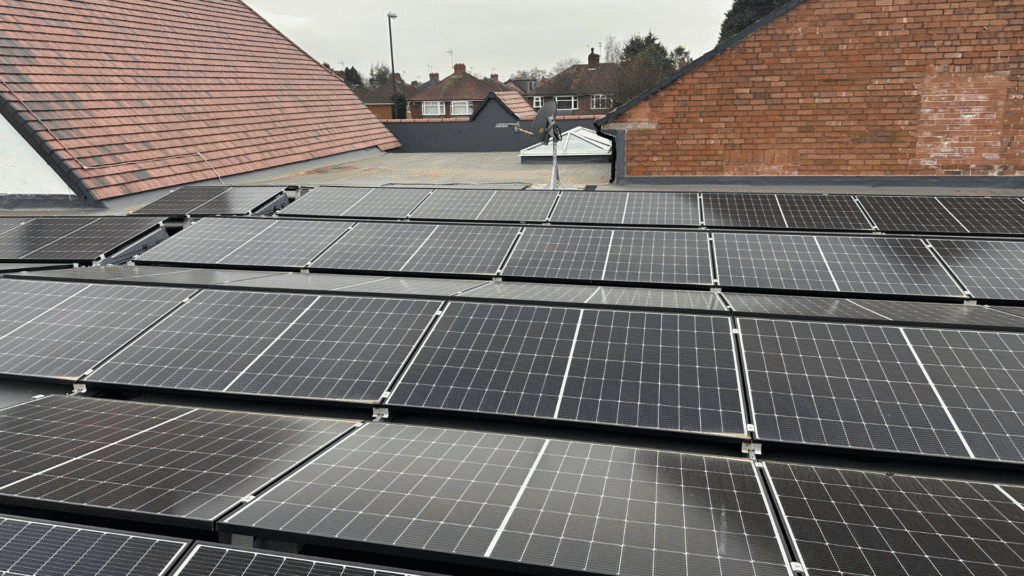
On-site renewable energy reduces emissions by displacing grid electricity with clean, zero-carbon generation. Technologies such as solar photovoltaic (PV) systems generate electricity directly at the point of use, reducing the need to import power from carbon-intensive sources.
Each kilowatt-hour of renewable electricity generated on-site directly lowers reported Scope 2 emissions, making the impact easy to measure and report.
For many UK businesses, roof-mounted solar PV offers the fastest route to meaningful reductions due to falling technology costs and strong alignment with daytime energy demand.
The Role of Battery Storage
Battery storage enhances the impact of on-site renewables by allowing organisations to store excess generation and use it when demand is highest. This improves self-consumption, reduces peak electricity imports, and further cuts Scope 2 emissions.
From a reporting perspective, battery-backed renewable systems also improve consistency in emissions reductions, particularly for organisations operating extended hours or variable load profiles.
Strengthening Reporting and Carbon Accounting
Accurate Scope 2 reporting depends on reliable data. On-site renewable integration improves visibility over energy flows, making it easier to track consumption, generation, and emissions reductions.
This data supports compliance with carbon reporting frameworks and improves confidence in audits, disclosures, and stakeholder reporting. It also helps organisations move away from estimates toward evidence-based carbon accounting.
Beyond Carbon: Commercial Benefits
While emissions reduction is a key driver, on-site renewables also deliver wider benefits:
- Reduced energy costs and long-term price stability
- Improved energy resilience and reduced exposure to grid constraints
- Stronger ESG performance, supporting investor and customer confidence
- Future-proofing assets against tightening regulation
These benefits help ensure that Scope 2 reduction strategies are sustainable both environmentally and financially.
Integrating Renewables into a Wider Net Zero Strategy
On-site renewables are most effective when implemented as part of a broader energy and carbon strategy. Energy audits, feasibility studies, and performance modelling help ensure systems are correctly sized and aligned with operational demand.
This integrated approach avoids underperformance and ensures renewable investments deliver maximum carbon and commercial value.
Turning Scope 2 Reduction into Action
Reducing Scope 2 emissions is one of the most achievable steps organisations can take toward net zero. By integrating on-site renewables, businesses can cut emissions at source, strengthen reporting, and improve energy resilience.
At TEST Consulting, we help organisations understand their Scope 2 emissions, assess renewable opportunities, and deliver practical solutions that support long-term net zero strategies, turning ambition into measurable results.
Find out more about how we can help you with your renewable energy solutions:
Tel: 0113 467 7650
Related Articles
Looking for more insights? Check out these related posts that delve deeper into similar topics.